

Calibrations
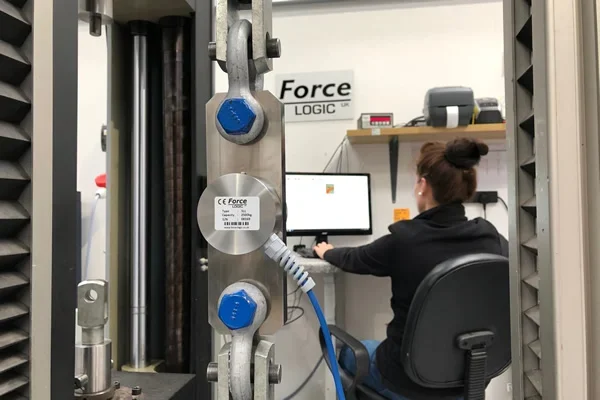
Load cell calibration is the process of verifying a load cell’s accuracy by comparing its readings against a reference device of known accuracy. This is typically carried out by applying known loads up to the unit’s rated capacity, using certified test masses or force-generating equipment with a reference load cell.
What is load cell calibration?
Regular calibration ensures load measurements remain accurate, repeatable, and within accepted tolerances. Load cells consist of multiple interacting components—including the load-bearing element, strain gauges, and signal conditioning electronics—each of which can experience gradual changes over time due to usage, environmental conditions, vibration, impact loads, or overload events. Calibration confirms the system continues to perform as intended.
Why is calibration important?
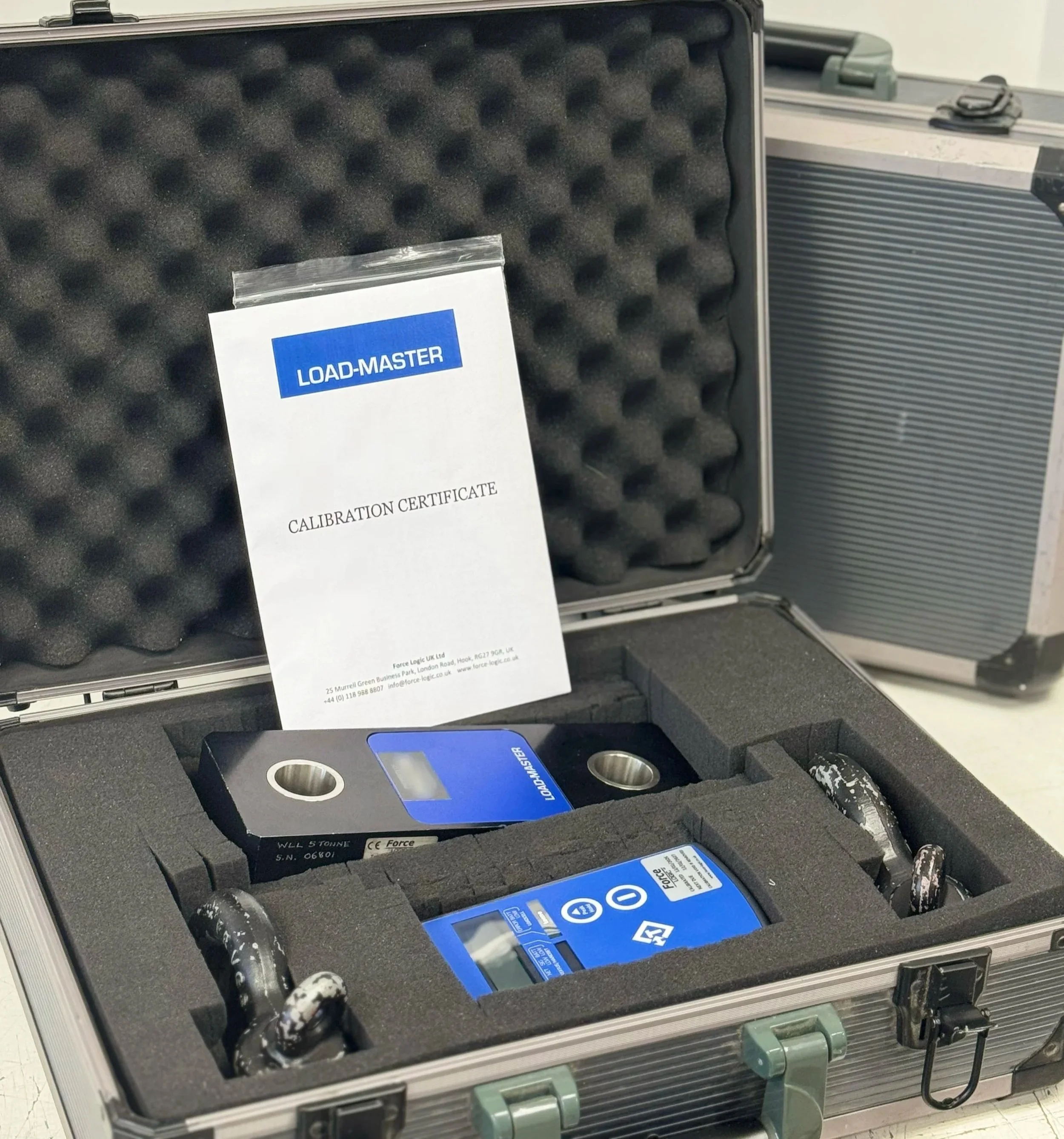
We recommend load cells are inspected and calibrated annually to maintain measurement accuracy and safe operation. While calibration intervals may be influenced by quality systems, industry standards, or regulations, the final responsibility rests with the equipment owner and should reflect how critical the load cell is to the application and how frequently it is used.
How often should load cells be calibrated?
Force Logic UK Ltd provides UKAS-traceable load cell calibration, using reference equipment calibrated by UKAS-accredited laboratories operating to ISO 17025 standards. Full UKAS-accredited calibration certificates can also be supplied where required.